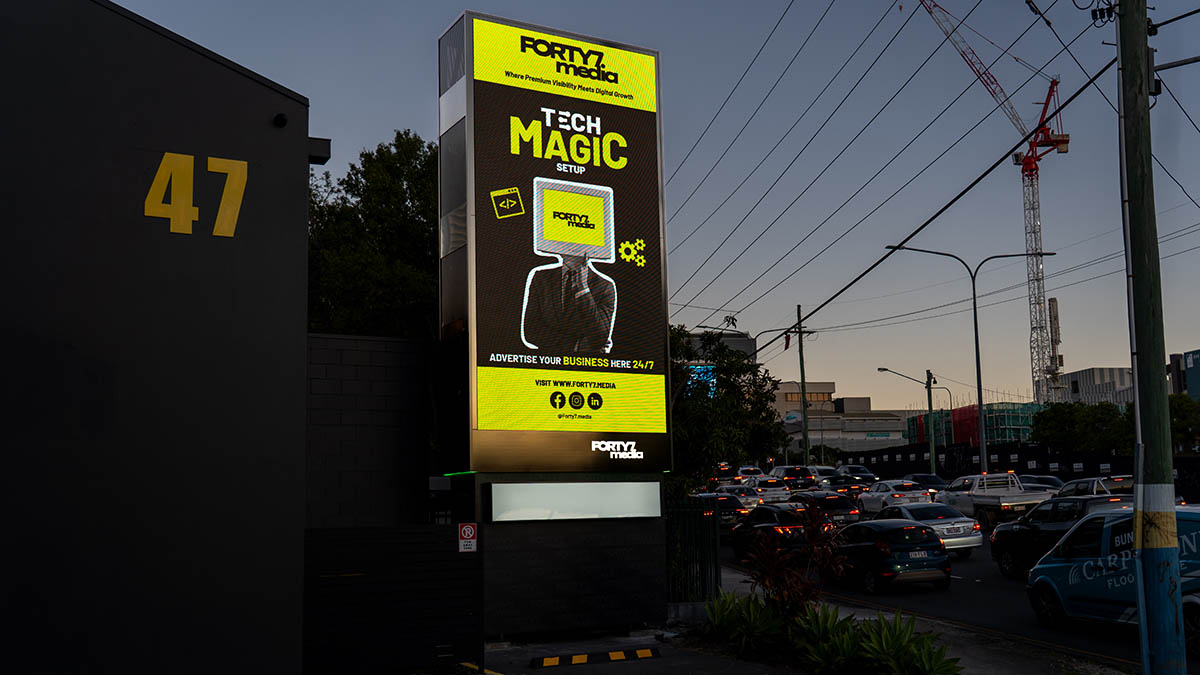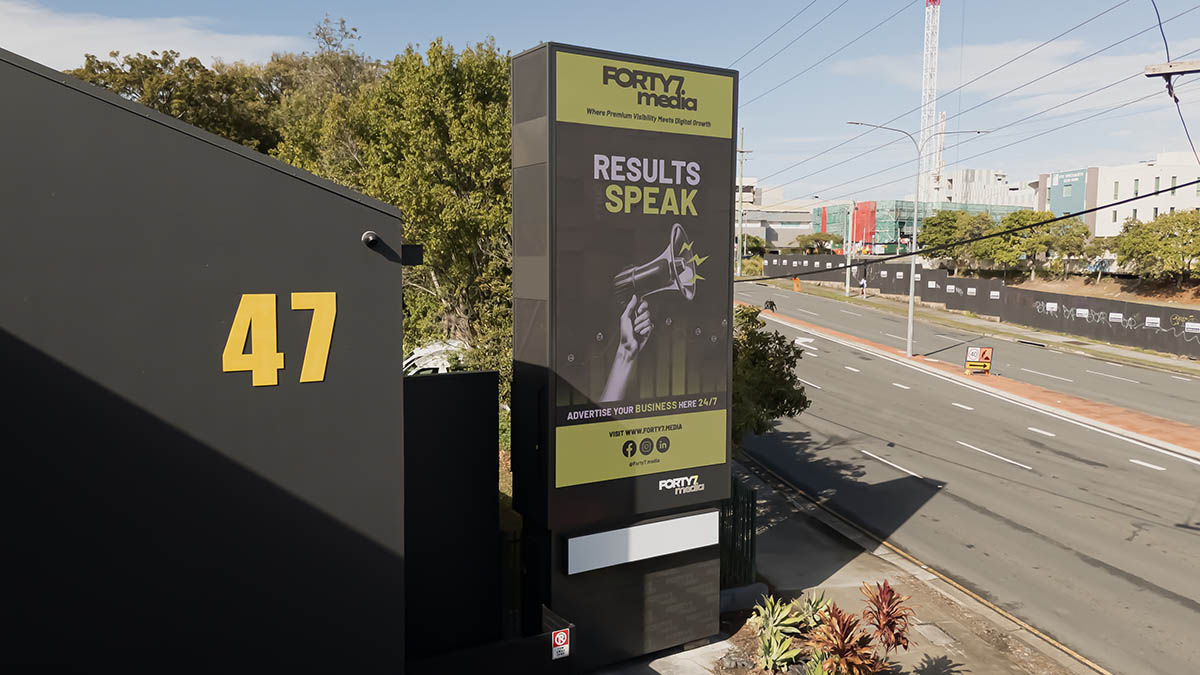
The marketing question that’s reshaping outdoor advertising. Here’s what the latest research reveals, and it might surprise you.
Picture this: You’re driving to work when that massive digital billboard catches your eye. In just 30 seconds, you’ve seen ads for three different brands, each one perfectly timed and brilliantly displayed. Right next to it stands a traditional painted billboard that’s been advertising the same local restaurant for six months straight.
This fascinating contrast is playing out on highways and city streets across Australia right now. It’s the ultimate showdown between innovation and tradition, and the results are reshaping how smart marketers invest their advertising dollars.
But here’s the real question that keeps marketing strategists awake at night: In our always-on, 360-degree marketing world, does the format of your billboard matter as much as when and how it connects with your audience?
The Numbers Tell a Compelling Story
The Outdoor Advertising Association’s latest research shows digital billboards grab 2.5 times more attention than their static counterparts. That’s not just a slight improvement; that’s a complete transformation in how audiences engage with outdoor advertising.
But wait, it gets even more interesting. Nielsen’s comprehensive study revealed that 83% of people remember seeing digital billboard ads, compared to only 65% for static displays. That’s an 18% boost in brand recall that could fundamentally change your campaign’s impact.
Australian transport authorities are seeing the same dramatic results across major metropolitan areas. During peak traffic times, digital billboards consistently outperform static ones by significant margins. The evidence is crystal clear: digital is winning the attention war.
Yet this raises a deeper question about modern marketing. Are we simply chasing the shiny new object, or are we witnessing a genuine evolution in how consumers process and remember advertising messages?
The Psychology Behind Digital Dominance
Ever wonder why your brain automatically notices when something moves or changes? It’s hardwired survival instinct, and digital billboards tap into this powerful psychological trigger in ways that traditional advertising never could.
Content rotation keeps your audience engaged and prevents that dreaded “banner blindness” where ads become invisible background noise. When multiple brands share premium spots, the constant variety keeps viewers glued to the screen instead of tuning out. But this creates an intriguing paradox: in our quest to grab attention, are we inadvertently training consumers to expect constant stimulation?
The real magic happens with real-time relevance. Imagine your coffee ad appearing exactly when morning commuters need their caffeine fix, then seamlessly switching to ice-cold beverages when the temperature hits 35 degrees. Weather-triggered campaigns, traffic-responsive messaging, and perfectly timed promotions create those “wow, that’s exactly what I need right now” moments that drive immediate action.
This ability to deliver contextually relevant messages 24/7 represents a fundamental shift in how we think about audience engagement. We’re no longer broadcasting to the masses; we’re having individualized conversations at scale.
The Enduring Power of Static Simplicity
Before you write off traditional billboards completely, let’s explore why they’re still delivering remarkable results in our hyperconnected world. These advertising veterans have some serious advantages that digital displays simply cannot replicate.
Cost-effectiveness remains their secret weapon. Industry reports consistently show static billboards cost 60% to 70% less than digital alternatives when you factor in everything from design to installation to ongoing maintenance. For growing businesses watching every dollar, this difference often determines whether a campaign happens at all.
But there’s something deeper at play here. In our constantly changing digital landscape, static billboards offer something increasingly rare: consistency. Your message works for you 24/7 without interruption, building familiarity through pure persistence. While digital ads flash by for 8 to 10 seconds every few minutes, static billboards provide unwavering brand presence.
The Australian Competition and Consumer Commission has documented countless success stories where simple, well-crafted static campaigns achieved incredible brand recognition through sustained visibility. Sometimes, in our rush to embrace innovation, we forget the fundamental power of repetition in building brand memory.
Context Is King: Location Determines Success
Here’s the insider secret that most marketers miss: where you place your billboard matters infinitely more than which type you choose. This truth challenges the entire digital versus static debate and forces us to think more strategically about audience behavior.
Different locations call for entirely different strategies. Highway corridors favor digital billboards because traffic patterns change dramatically throughout the day. You can target construction workers during morning rush hour, then flip to retail messaging for afternoon shoppers, maximizing every second of premium real estate.
Complex city intersections often see better performance from static displays. Australian Road Research Board studies show that when drivers are processing traffic lights, pedestrians, and navigation decisions, simpler static messages actually penetrate better than dynamic content requiring additional mental processing power.
Shopping districts are where digital billboards truly shine. Real-time promotions, flash sales, and “happening right now” messages can instantly drive foot traffic to nearby stores. The immediacy factor becomes incredibly powerful in retail environments.
This location-based performance variation suggests that successful outdoor advertising isn’t about choosing sides in the format war. It’s about understanding your audience’s mindset and context at specific moments and locations.
The ROI Reality That Changes Everything
Let’s talk about what really matters: return on investment and actual business results. In our data-driven marketing world, attention-grabbing stats are great, but profit-driving performance is what determines campaign success.
Digital billboards deliver higher engagement rates that can justify their premium pricing when you have comprehensive tracking systems in place. Real-time optimization means you can adjust campaigns instantly based on performance data. Plus, cost-sharing with other advertisers can make those premium locations surprisingly affordable.
Static billboards offer different but equally valuable benefits. Lower upfront costs enable longer campaign durations, and consistent messaging builds brand recognition through strategic repetition. Simpler logistics also mean fewer potential failure points: no technical glitches, no system failures, just reliable 24/7 advertising presence.
But here’s where it gets really interesting for modern marketers: the most successful campaigns integrate outdoor advertising with comprehensive 360-degree marketing strategies. Your billboard becomes one touchpoint in a customer journey that spans multiple channels, devices, and time periods.
What Progressive Marketers Are Discovering
Recent studies published in the Journal of Advertising Research reveal fascinating insights about integrated campaign performance. Digital billboards generate up to 40% higher conversion rates when properly integrated with mobile tracking, social media retargeting, and comprehensive attribution systems.
The key phrase here is “properly integrated.” Without solid measurement infrastructure and strategic coordination across all marketing channels, you’re essentially operating in silos regardless of which billboard format you choose.
Meanwhile, the Outdoor Media Association’s annual effectiveness survey continues highlighting strong performance for static displays in long-term brand building campaigns. Local businesses and service providers especially benefit from consistent community presence that builds trust and familiarity over extended periods.
Progressive marketers are increasingly adopting hybrid strategies that leverage both formats strategically. Digital billboards create immediate impact and drive short-term response, while static displays provide ongoing brand reinforcement throughout longer customer relationship cycles.
This integrated approach reflects a broader evolution in marketing thinking: moving beyond individual tactic optimization toward comprehensive customer experience orchestration.
The Future of Outdoor Advertising
The outdoor advertising world is evolving at lightning speed, and the innovations emerging suggest that the digital versus static debate might become irrelevant sooner than we think.
Programmatic buying allows intelligent systems to purchase optimal ad placements automatically based on real-time audience data and campaign performance. AI-driven content optimization changes creative elements dynamically based on weather, traffic, demographics, and conversion data. Advanced attribution modeling tracks exactly who saw your ad and what they did across multiple touchpoints and time periods.
We’re also seeing exciting developments in sustainability initiatives driving innovation in both digital and traditional formats. Solar-powered displays, recyclable materials, and energy-efficient LED technology are making outdoor advertising more environmentally responsible.
But perhaps most intriguingly, augmented reality integration is beginning to blur the lines between static and digital formats. Traditional billboards enhanced with AR capabilities can deliver dynamic, personalized experiences without the infrastructure costs of fully digital displays.
Rethinking the Question Entirely
So, are digital billboards more effective than static ones? The honest answer is: we’re asking the wrong question.
The real question is: how do we create outdoor advertising experiences that seamlessly integrate with our customers’ lives, deliver genuine value, and drive measurable business results regardless of format?
This shift in thinking moves us beyond technology debates toward strategic customer experience design. It’s about understanding when your audience is most receptive to your message, where they’re most likely to take action, and how outdoor advertising fits into their broader journey with your brand.
Choose digital billboards when flexibility, real-time optimisation, and contextual relevance align with your campaign objectives and audience behaviour patterns. Embrace static billboards when consistency, extended exposure, and cost efficiency support your long-term brand building goals.
The 24/7 Marketing Reality
In today’s always-on consumer environment, successful outdoor advertising requires round-the-clock strategic thinking. Your billboard isn’t just competing with other billboards; it’s competing with smartphones, social media, podcasts, and every other attention-grabbing element in your audience’s daily experience.
This reality demands a 360-degree approach to campaign planning that considers how outdoor advertising integrates with every other touchpoint in your customer’s journey. The most effective campaigns coordinate timing, messaging, and follow-up actions across multiple channels to create cohesive experiences that guide prospects toward conversion.
Whether you choose digital innovation or traditional reliability, success depends on understanding your audience deeply enough to deliver the right message at the right moment in the right context. The format becomes secondary to the strategic insight driving your campaign decisions.
Starting the Conversation
The outdoor advertising landscape offers incredible opportunities for businesses ready to think holistically about their marketing approach. Rather than getting caught up in format debates, the smartest marketers focus on comprehensive strategies that maximize every customer interaction.
What’s your experience with outdoor advertising? Have you found that campaign success depends more on format choice or strategic integration with your broader marketing efforts? Share your insights below and let’s explore how outdoor advertising fits into the modern marketing mix.
The conversation about billboard effectiveness isn’t just about static versus digital. It’s about how we adapt traditional advertising methods to serve modern consumer behaviour while building genuine connections that drive business growth.
At forty7.media, we believe great marketing happens 24/7 across every customer touchpoint. Whether you’re exploring digital billboards, static displays, or integrated campaigns that span multiple channels, the key is strategic thinking that puts your audience first. Ready to discuss how outdoor advertising fits into your comprehensive marketing strategy?
#OutdoorAdvertising #DigitalBillboards #MarketingStrategy #AdvertisingROI #BrandAwareness #IntegratedMarketing #CustomerExperience #MarketingInnovation